
|
|||||
|
 | |
| |
| |
| |
| |
| |
|
Gene: LINC02814 |
Gene summary for LINC02814 |
 Gene summary. Gene summary. |
| Gene information | Species | Human | Gene symbol | LINC02814 | Gene ID | 112267873 |
| Gene name | long intergenic non-protein coding RNA 2814 | |
| Gene Alias | LINC02814 | |
| Cytomap | 1q42.13 | |
| Gene Type | ncRNA | GO ID | NA | UniProtAcc | NA |
Top |
Malignant transformation analysis |
| Identification of the aberrant gene expression in precancerous and cancerous lesions by comparing the gene expression of stem-like cells in diseased tissues with normal stem cells |
| Malignant transformation involving gene list. |
| Entrez ID | Symbol | Replicates | Species | Organ | Tissue | Adj P-value | Log2FC | Malignancy |
| 112267873 | LINC02814 | AEH-subject1 | Human | Endometrium | AEH | 3.51e-03 | 9.44e-02 | -0.3059 |
| 112267873 | LINC02814 | AEH-subject2 | Human | Endometrium | AEH | 1.04e-02 | 1.28e-01 | -0.2525 |
| 112267873 | LINC02814 | AEH-subject4 | Human | Endometrium | AEH | 3.70e-14 | 3.60e-01 | -0.2657 |
| 112267873 | LINC02814 | AEH-subject5 | Human | Endometrium | AEH | 9.94e-37 | 7.40e-01 | -0.2953 |
| 112267873 | LINC02814 | EEC-subject1 | Human | Endometrium | EEC | 7.69e-12 | 2.95e-01 | -0.2682 |
| 112267873 | LINC02814 | EEC-subject4 | Human | Endometrium | EEC | 1.95e-33 | 6.58e-01 | -0.2571 |
| 112267873 | LINC02814 | EEC-subject5 | Human | Endometrium | EEC | 1.85e-09 | 2.50e-01 | -0.249 |
| Page: 1 |
| Transcriptomic changes along malignancy continuum. |
| Tissue | Expression Dynamics | Abbreviation |
| Endometrium | 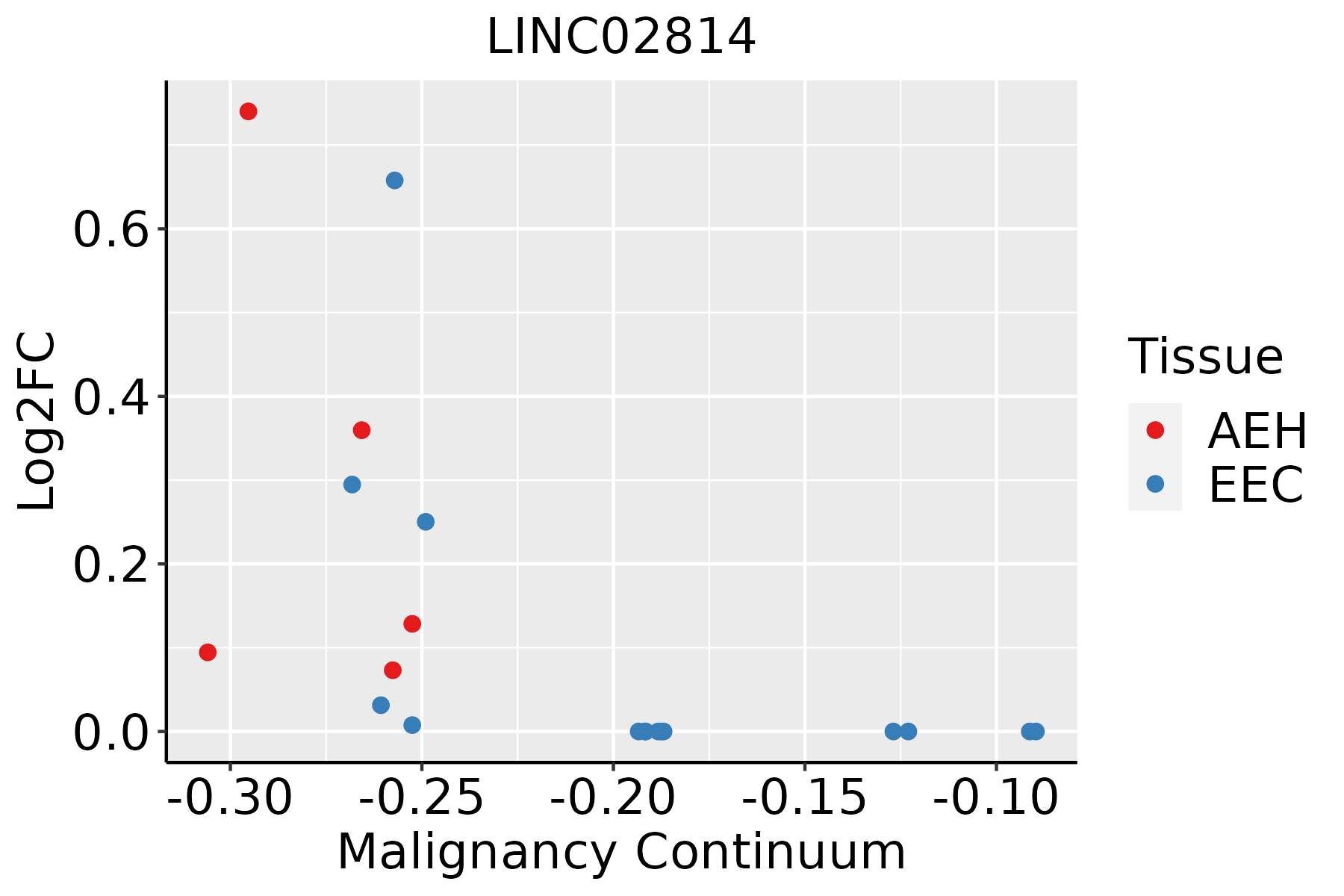 | AEH: Atypical endometrial hyperplasia |
| EEC: Endometrioid Cancer |
| ∗log2FC in expression of this searched gene in stem-like cells from each diseased tissue sample relative to stem-like cells in normal samples in each tissue plotted against the malignancy continuum. Samples are colored based on if they are from different disease stage. |
Top |
Malignant transformation related pathway analysis |
| Find out the enriched GO biological processes and KEGG pathways involved in transition from healthy to precancer to cancer |
| Figure of enriched GO biological processes. |
| Tissue | Disease Stage | Enriched GO biological Processes |
| Esophagus | ESCC | 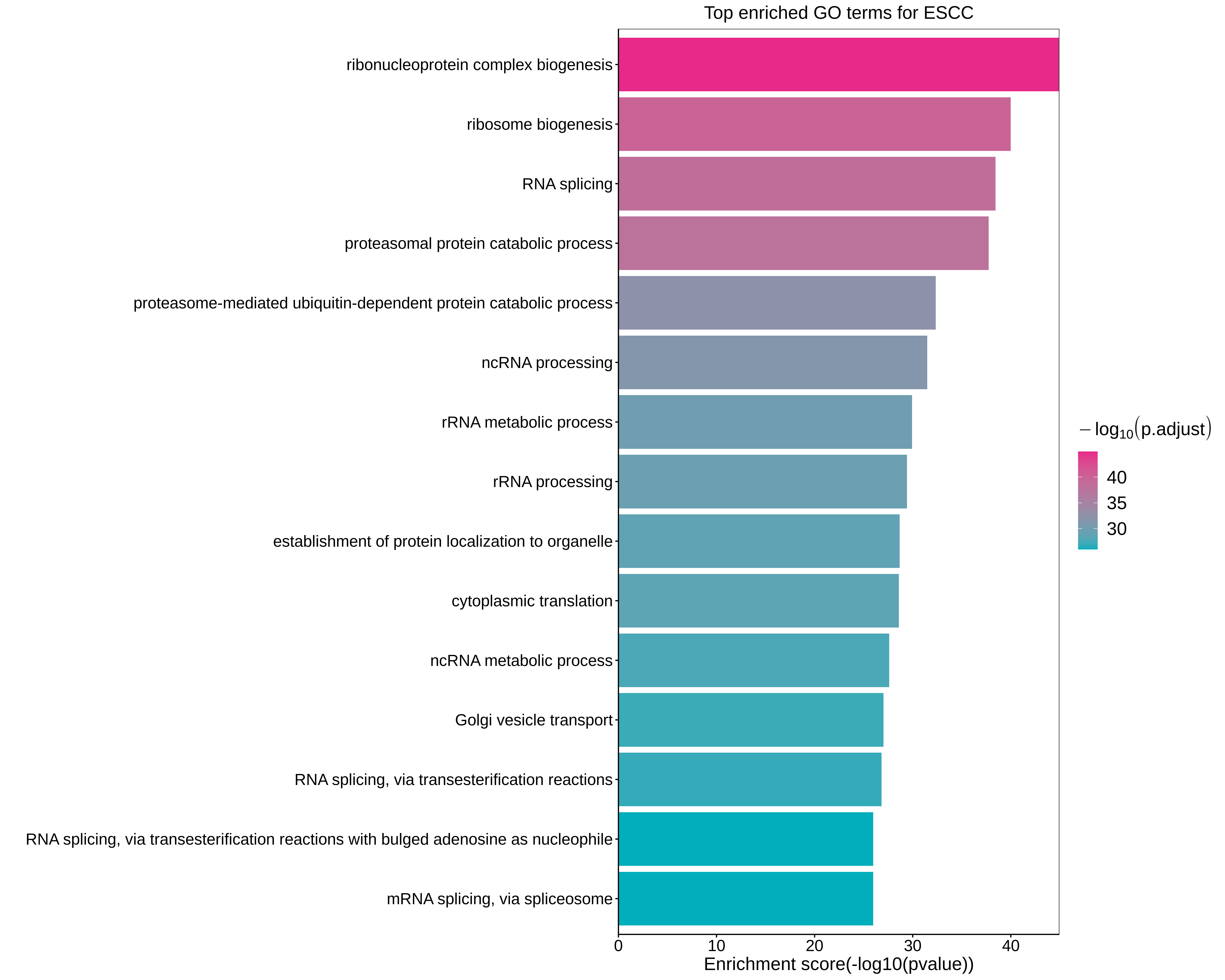 |
| Skin | AK | 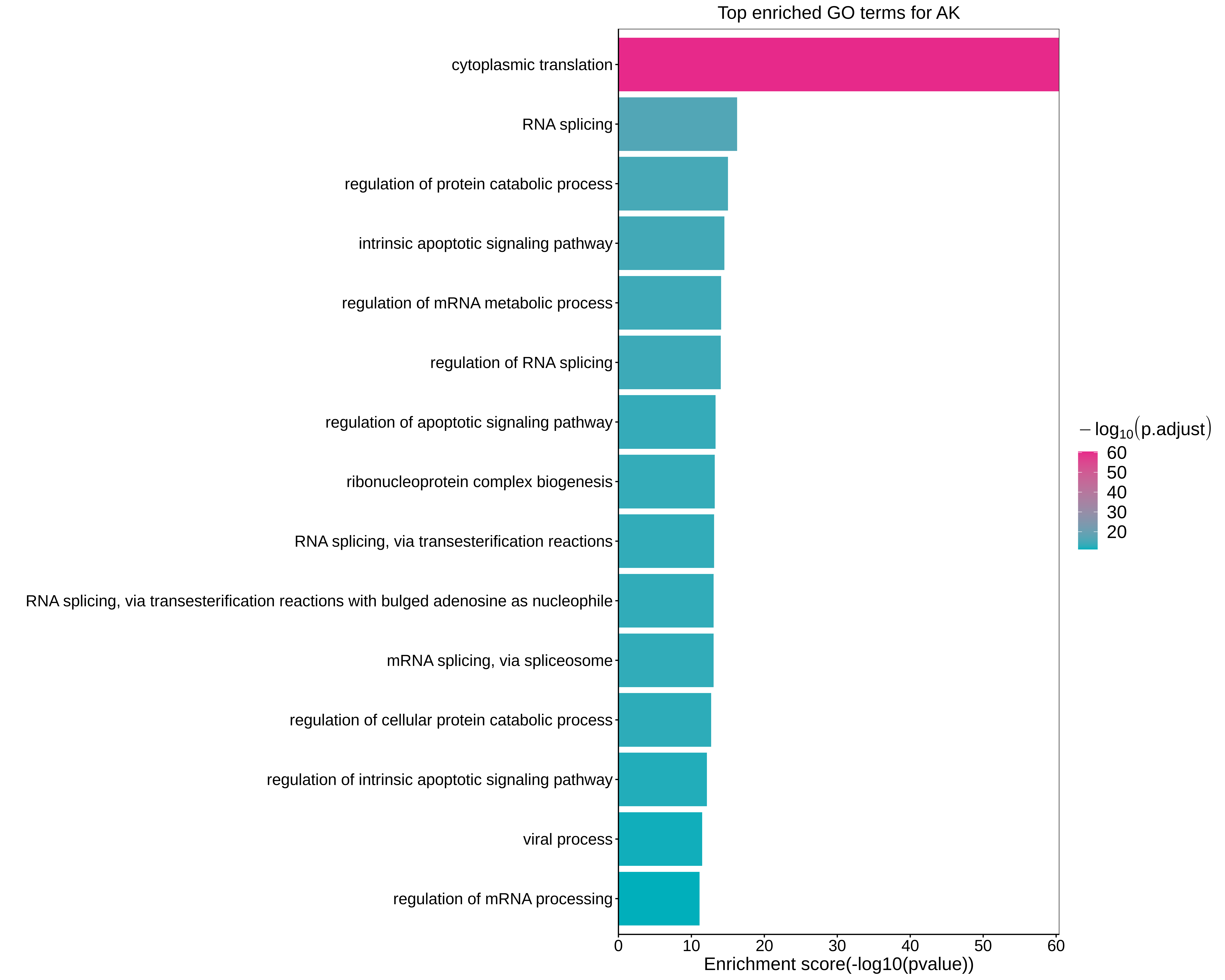 |
| Skin | SCCIS |  |
| Skin | cSCC | 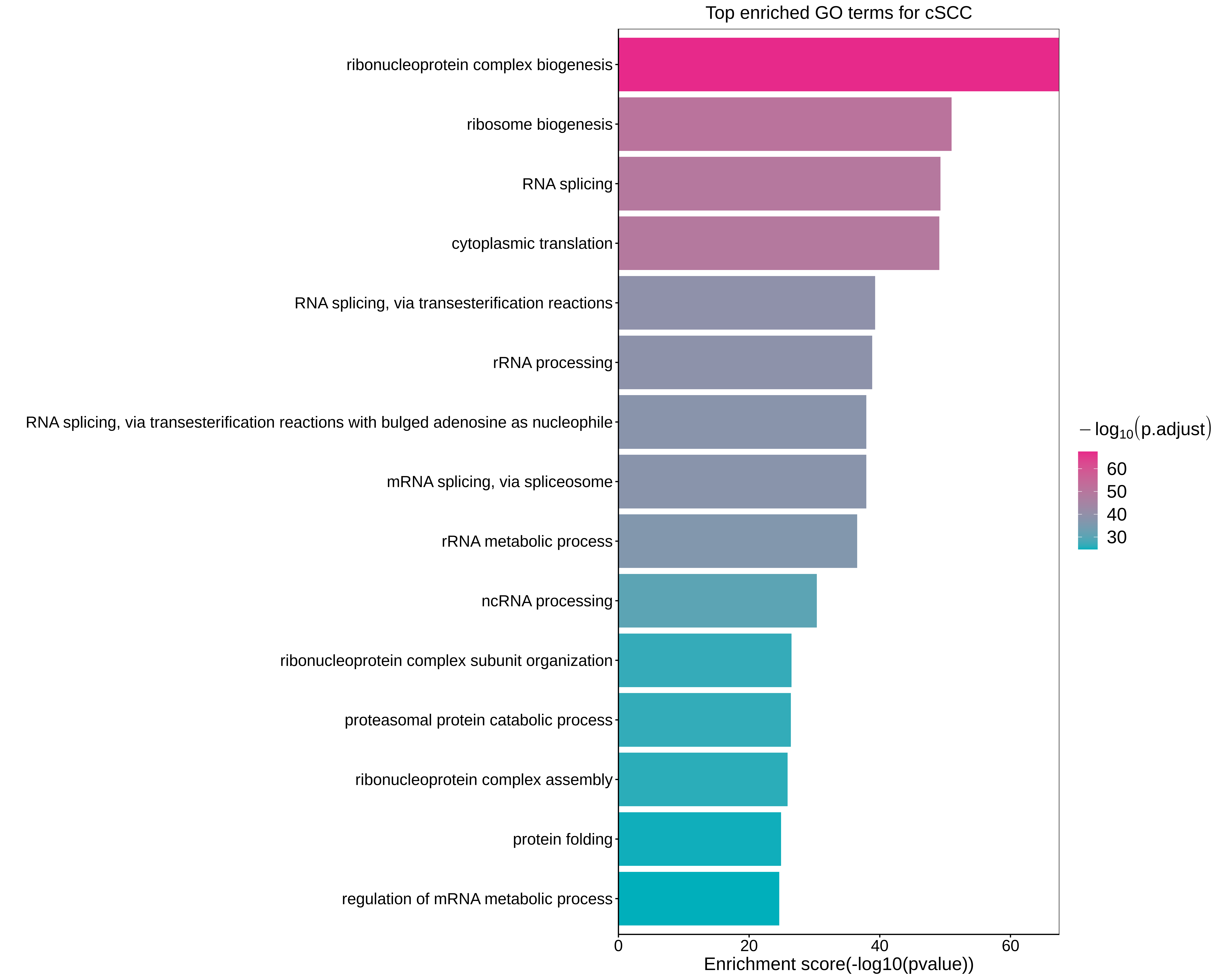 |
| Thyroid | HT |  |
| ∗Top 15 enriched GO BP terms are showed in the bar plot of each disease state in each tissue. Each row represents a significant GO biological process which is colored according to the -log10(p.adjust). |
| Page: 1 2 3 4 5 6 7 8 9 |
| Enriched GO biological processes. |
| GO ID | Tissue | Disease Stage | Description | Gene Ratio | Bg Ratio | pvalue | p.adjust | Count |
| Page: 1 |
| Enriched KEGG pathways. |
| Pathway ID | Tissue | Disease Stage | Description | Gene Ratio | Bg Ratio | pvalue | p.adjust | qvalue | Count |
| Page: 1 |
Top |
Cell-cell communication analysis |
| Identification of potential cell-cell interactions between two cell types and their ligand-receptor pairs for different disease states |
| Ligand | Receptor | LRpair | Pathway | Tissue | Disease Stage |
| Page: 1 |
Top |
Single-cell gene regulatory network inference analysis |
| Find out the significant the regulons (TFs) and the target genes of each regulon across cell types for different disease states |
| TF | Cell Type | Tissue | Disease Stage | Target Gene | RSS | Regulon Activity |
| ∗The dot plots of a searched regulon are shown for all cell subpopulations in each disease state of each tissue based on the regulon specific score inferred using pySCENIC and by calculating the average expression. |
| Page: 1 |
Top |
Somatic mutation of malignant transformation related genes |
| Annotation of somatic variants for genes involved in malignant transformation |
| Hugo Symbol | Variant Class | Variant Classification | dbSNP RS | HGVSc | HGVSp | HGVSp Short | SWISSPROT | BIOTYPE | SIFT | PolyPhen | Tumor Sample Barcode | Tissue | Histology | Sex | Age | Stage | Therapy Types | Drugs | Outcome |
| Page: 1 |
Top |
Related drugs of malignant transformation related genes |
| Identification of chemicals and drugs interact with genes involved in malignant transfromation |
| (DGIdb 4.0) |
| Entrez ID | Symbol | Category | Interaction Types | Drug Claim Name | Drug Name | PMIDs |
| Page: 1 |

Copyright 2023-Present -The University of Texas Health Science Center at Houston |