
|
||||||
|
 | |
| |
| |
| |
| |
| |
| |
|
Spatial pattern gene: OLFML2A (spascer ID:169611) |
Gene summary for OLFML2A |
 Gene summary |
| Gene information | |
| Species | Human | Gene symbol | OLFML2A | Gene ID | 169611 |
| Gene name | olfactomedin like 2A |
| Synonyms | PRO34319 |
| Cytomap | 9q33.3 |
| Type of gene | protein-coding |
| Description | olfactomedin-like protein 2Aphotomedin-1 |
| Modification date | 20220513 |
| UniProtAcc | Q68BL7 |
| Gene ontology with evidence Inferred from Direct Assay (IDA) and Biological aspect of Ancestor (IBA). |
| Gene | GO ID | GO term | PubMed ID | Category |
| OLFML2A | GO:0005615 | extracellular space | 21873635 | Component |
| OLFML2A | GO:0007165 | signal transduction | 21873635 | Process |
Top |
Spatial pattern events for OLFML2A |
| spatial pattern gene list. |
| Gene symbol | Species | Tissue | Replication | PMID | Adj p-value |
| OLFML2A | Human | Bladder | rep_1 | 34385456 | 9.47e-10 |
| OLFML2A | Human | Intestine | rep_colon1 | 34417225 | 1.95e-15 |
| OLFML2A | Human | Intestine | rep_colon2 | 34417225 | 8.12e-16 |
| OLFML2A | Human | Intestine | A3 | 33406409 | 1.38e-14 |
| OLFML2A | Human | Intestine | A4 | 33406409 | 1.97e-13 |
| OLFML2A | Human | Intestine | A8 | 33406409 | 4.00e-08 |
| OLFML2A | Human | Intestine | A9 | 33406409 | 5.81e-09 |
| OLFML2A | Human | Uterus | rep_2 | 34857954 | 2.55e-15 |
| OLFML2A | Human | Uterus | rep_3 | 34857954 | 1.09e-12 |
| OLFML2A | Human | Breast | CID4465 | 34493872 | 7.83e-15 |
| spatial pattern gene map.(click to enlarge the image in a new window) |
| H&E staining (if available) | Singel gene map |
Bladder_rep_1_H&E  | 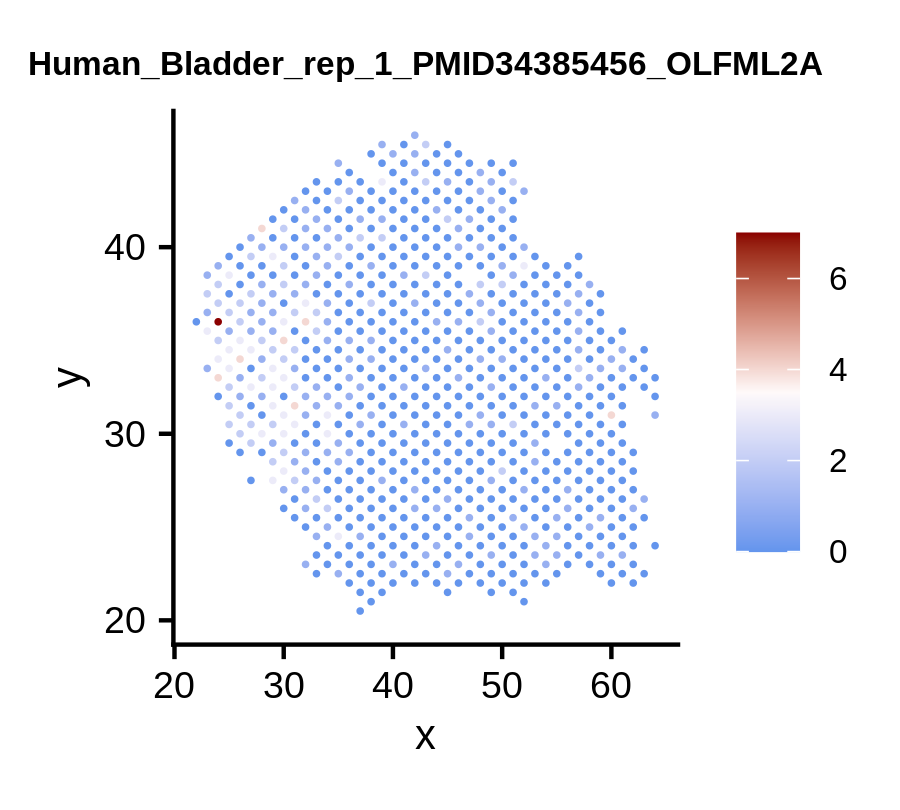 |
Intestine_rep_colon1_H&E 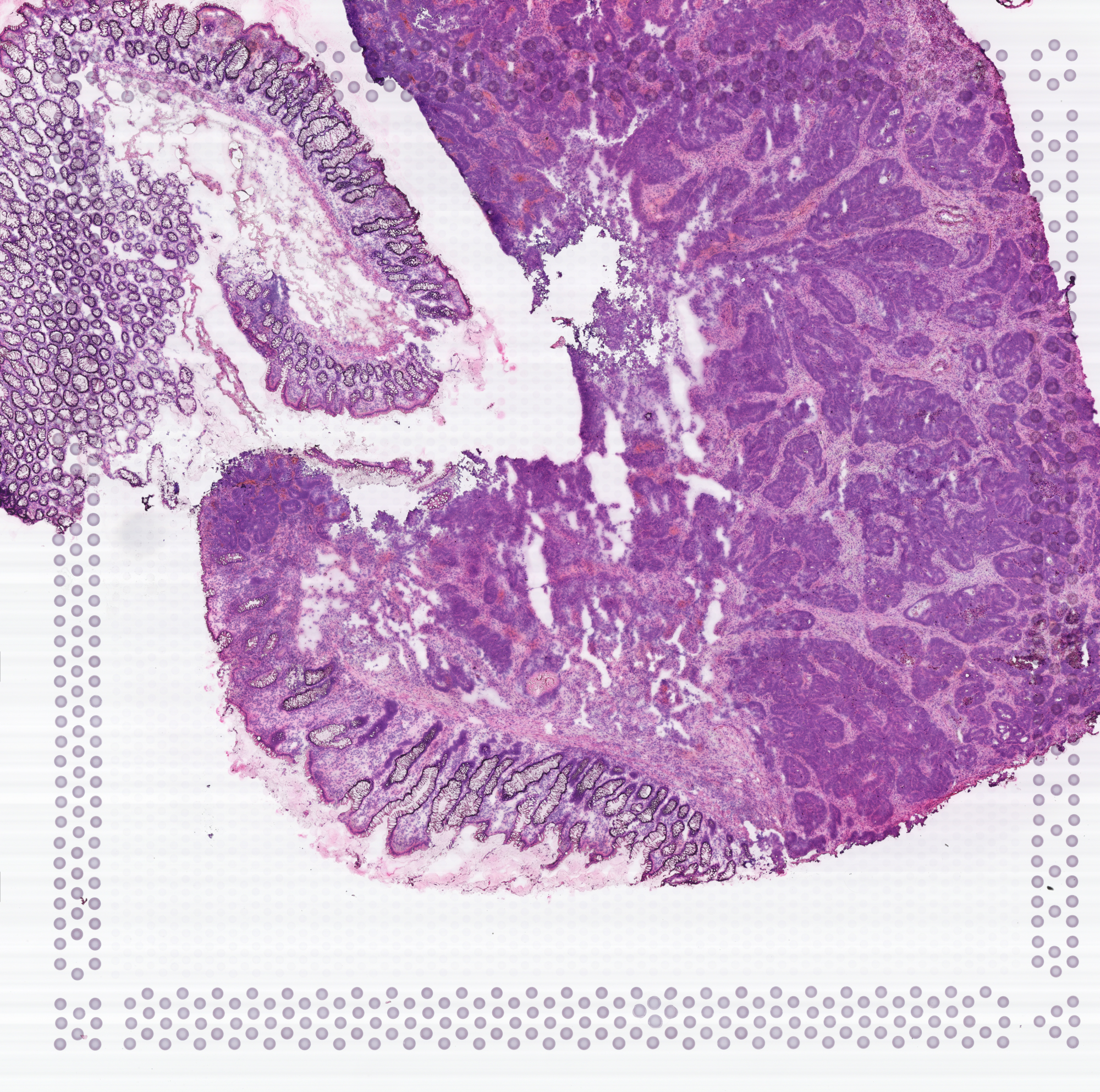 | 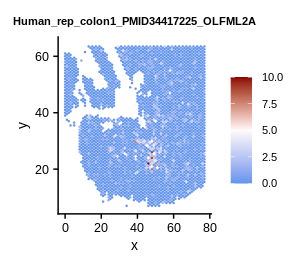 |
Intestine_rep_colon2_H&E 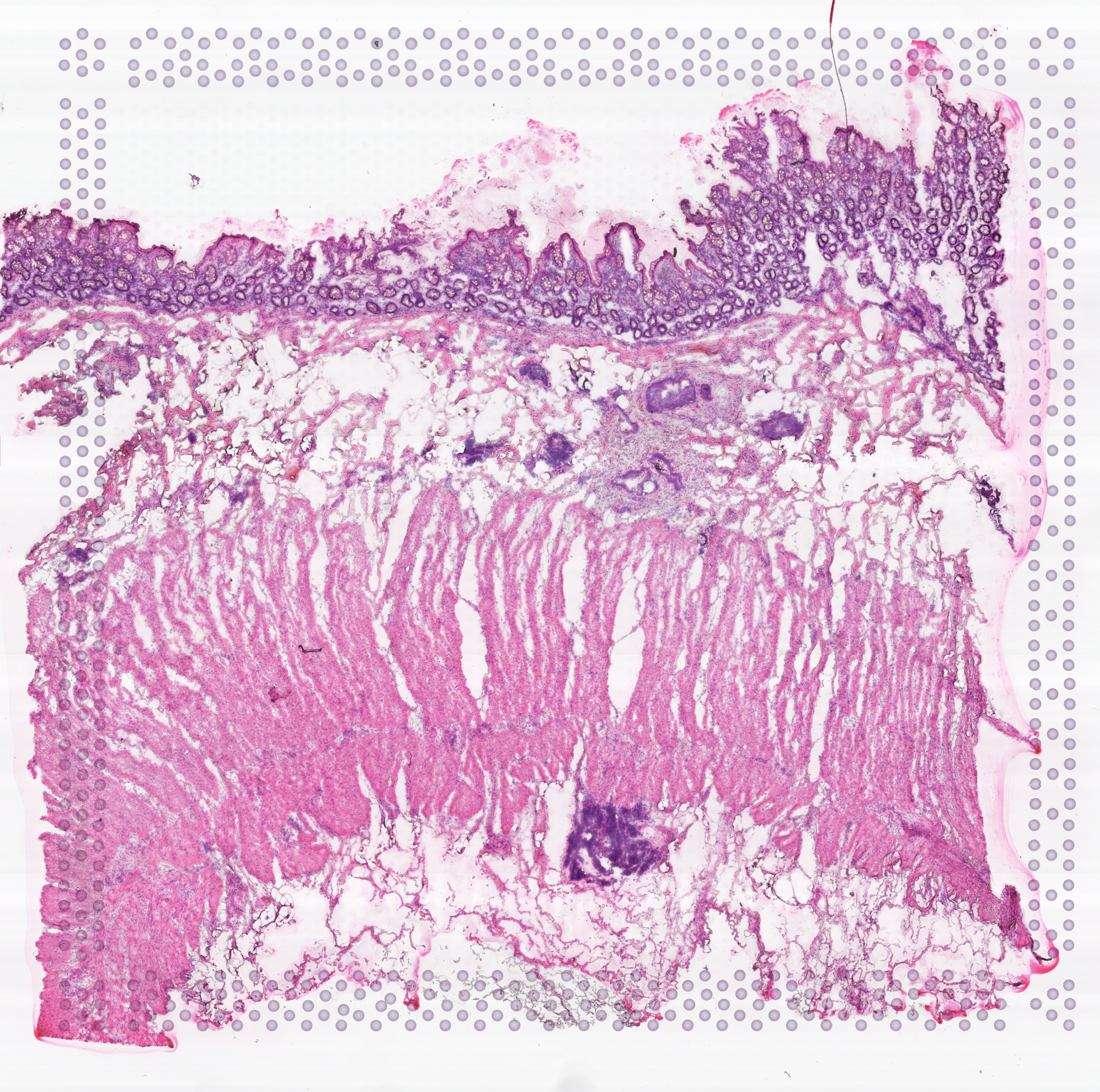 | 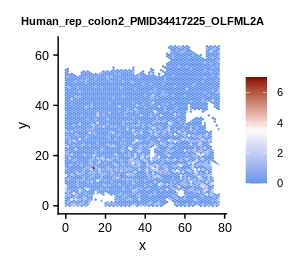 |
Intestine_A3_H&E 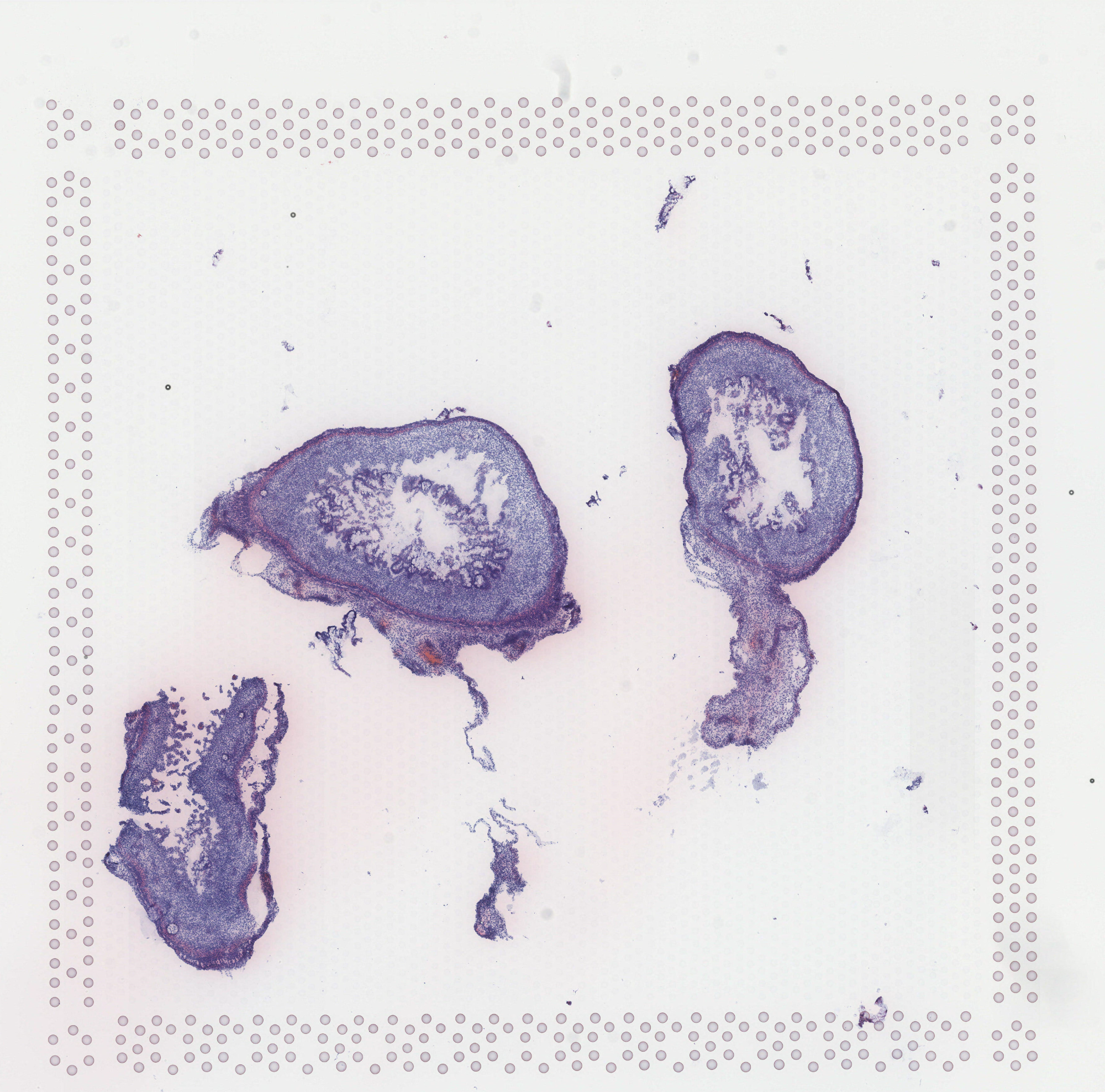 | 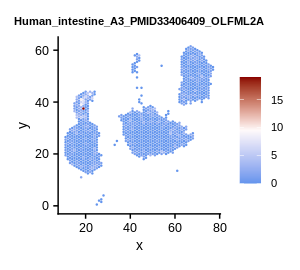 |
Intestine_A4_H&E 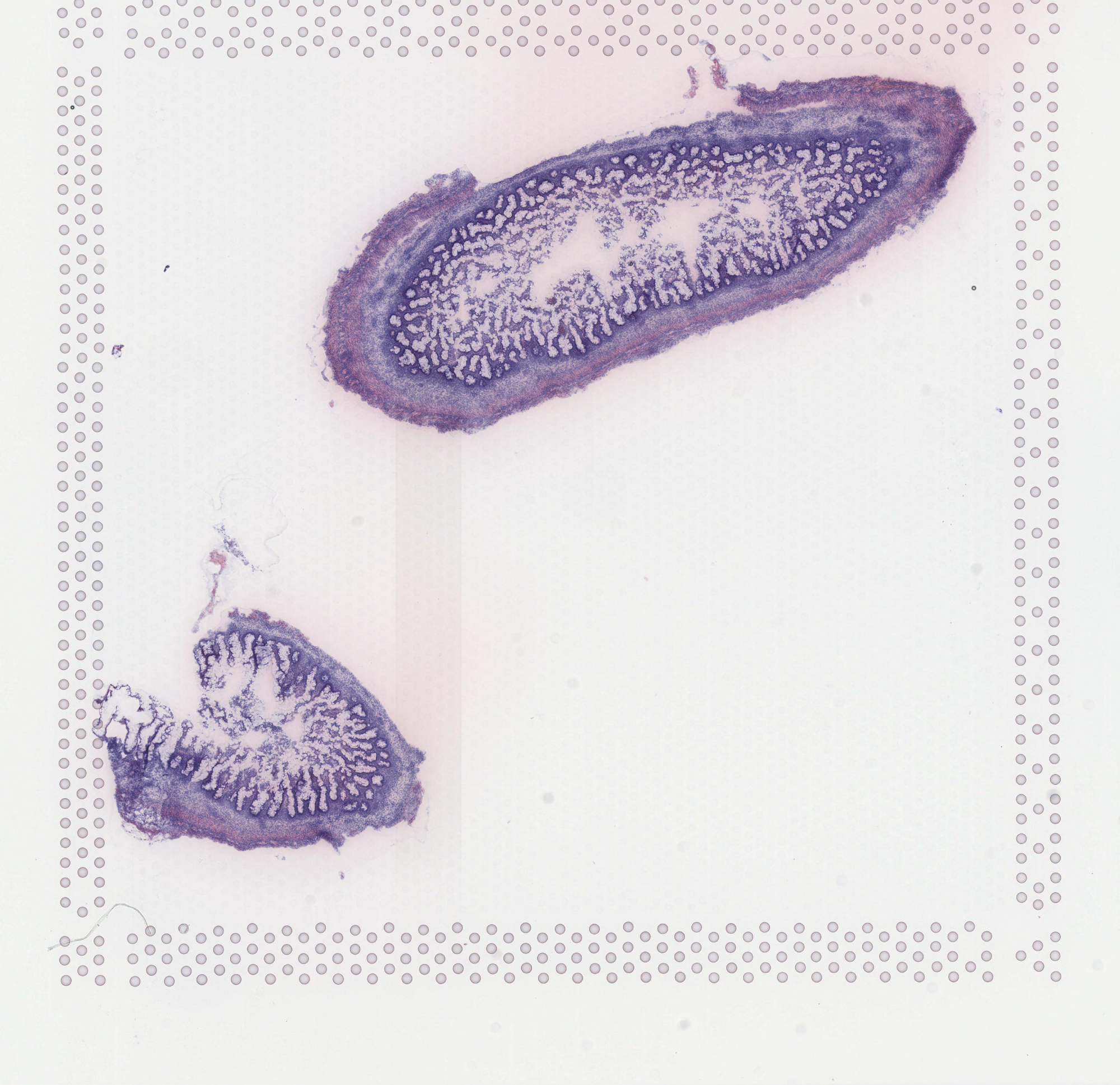 | 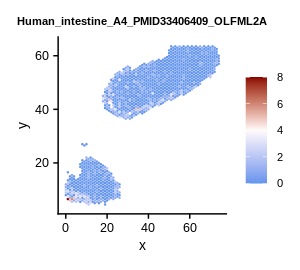 |
Intestine_A8_H&E 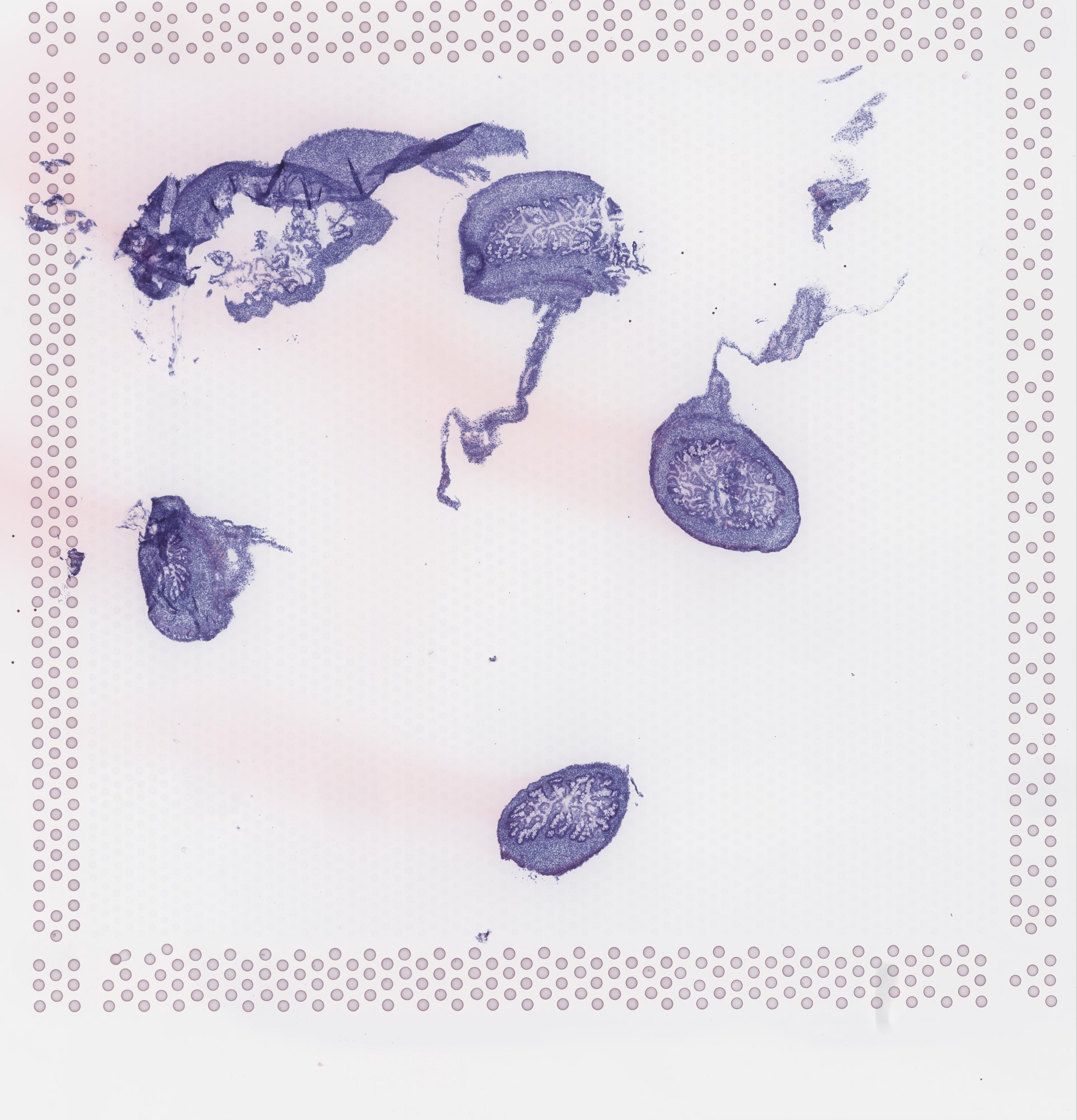 | 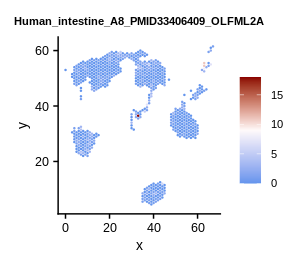 |
Intestine_A9_H&E 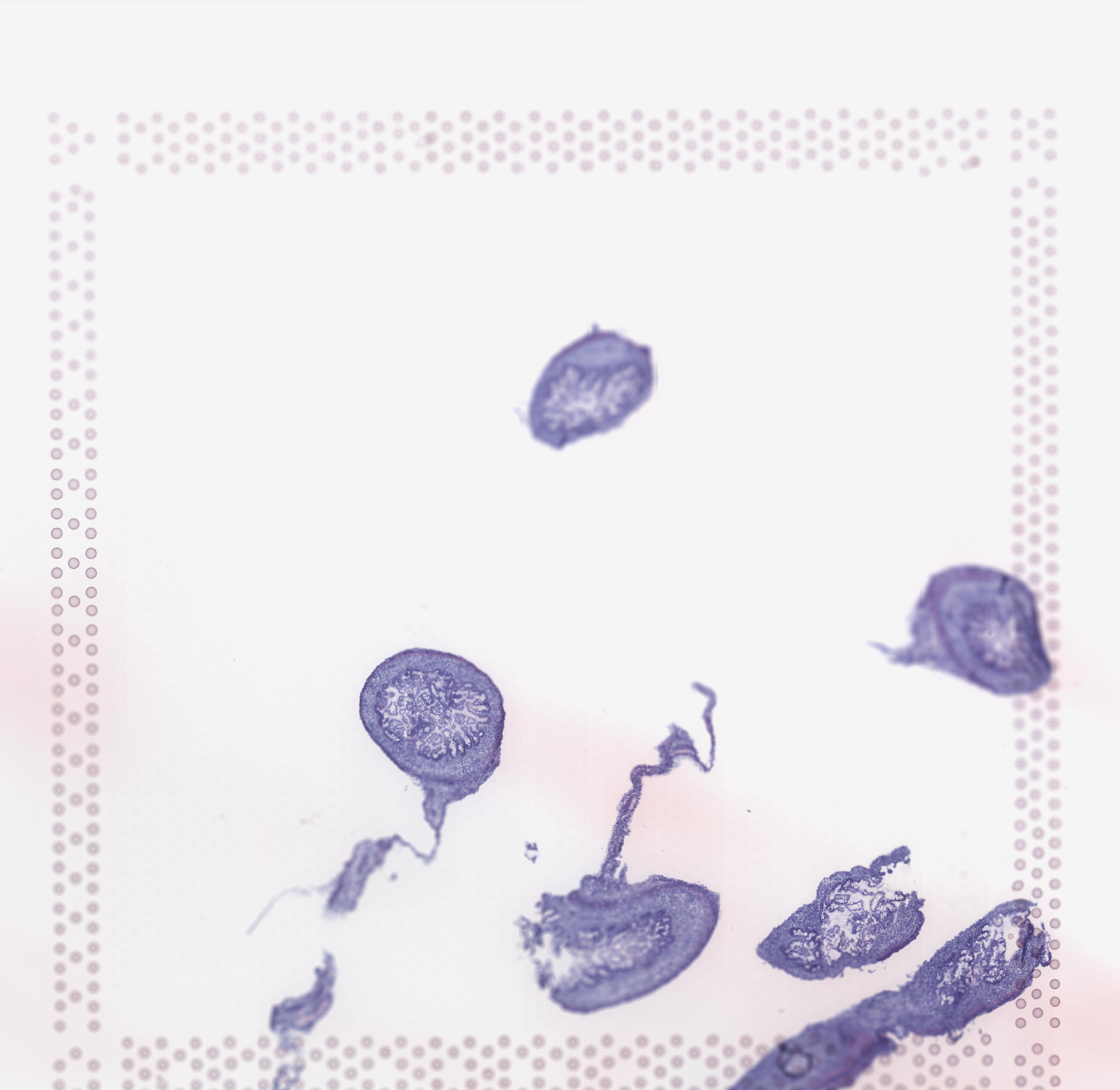 | 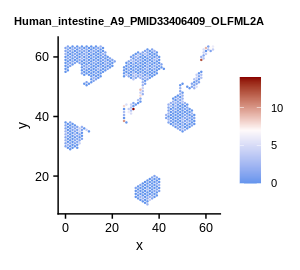 |
Uterus_rep_2_H&E 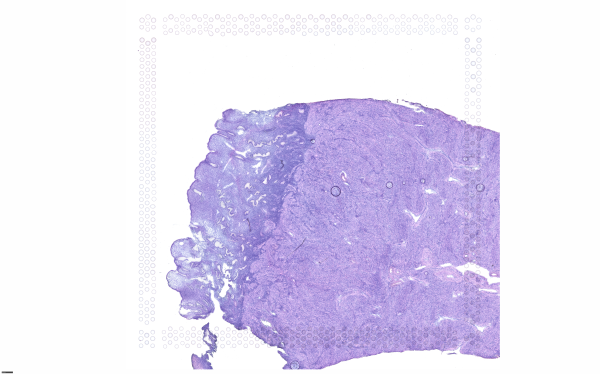 | 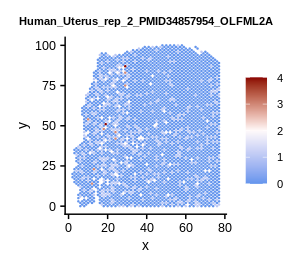 |
Uterus_rep_3_H&E 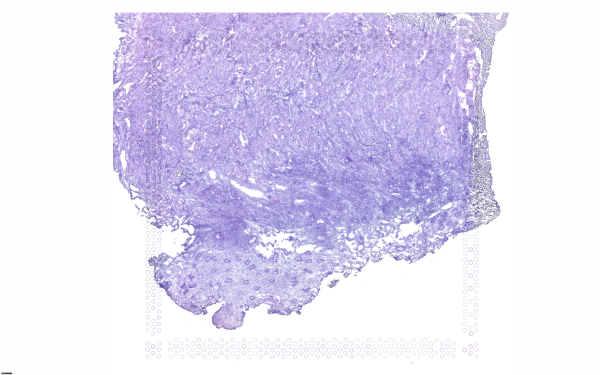 | 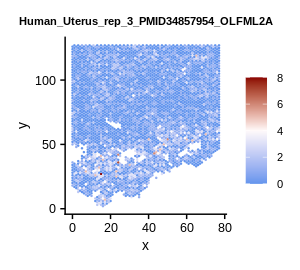 |
Breast_CID4465_H&E 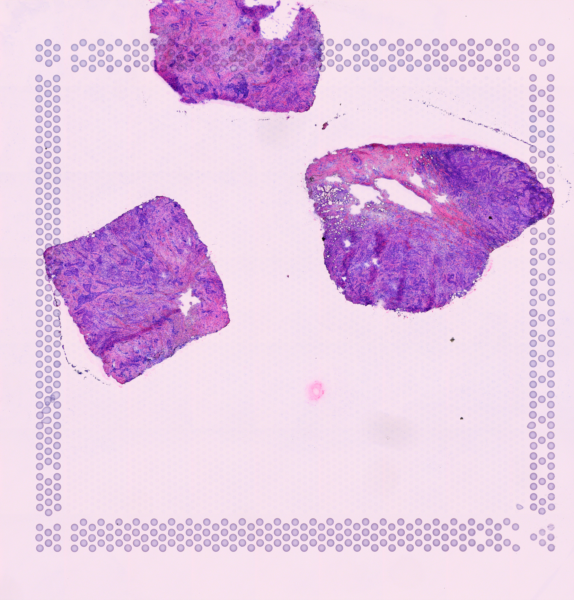 | 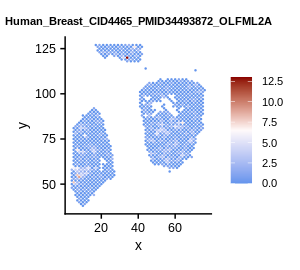 |
Top |
Spatial pattern pathway has OLFML2A envolved |
| Symbol | Pathway | Species | Tissue type | Replication | P-value |
| OLFML2A | GOBP_External_Encapsulating_Structure_Organization | Human | Bladder | rep_2 | 8.7e-05 |
| OLFML2A | GOBP_External_Encapsulating_Structure_Organization | Human | Breast | rep_1 | 2.8e-108 |
Top |
OLFML2A function as liang/receptor in single cell data |
| Tissue | Source | SourceCell | Target | TargetCell | PMID | Group |